
Commercial Roof Maintenance Checklist For Property Owners in Ohio
6/18/25
9 Min Read
Commercial roof maintenance is one of the most critical responsibilities for property managers and business owners looking to protect their buildings and control long-term costs. Your commercial roof doesn’t just shield your facility from the elements—it protects equipment, employees, customers, and your bottom line. Ignoring regular upkeep can lead to expensive damage, liability concerns, and disruptive repairs down the road. For building owners across Northeast Ohio, from Medina to Parma, that maintenance calendar has to account for one of the toughest roofing climates in the country.
In this guide, we’ll share:
- Why regular maintenance matters for commercial roofs
- 7 expert tips to extend the lifespan of your roofing system
- What to include in your annual roof maintenance plan
If you oversee the care of a commercial property, this blog is for you.
Why Commercial Roof Maintenance Matters
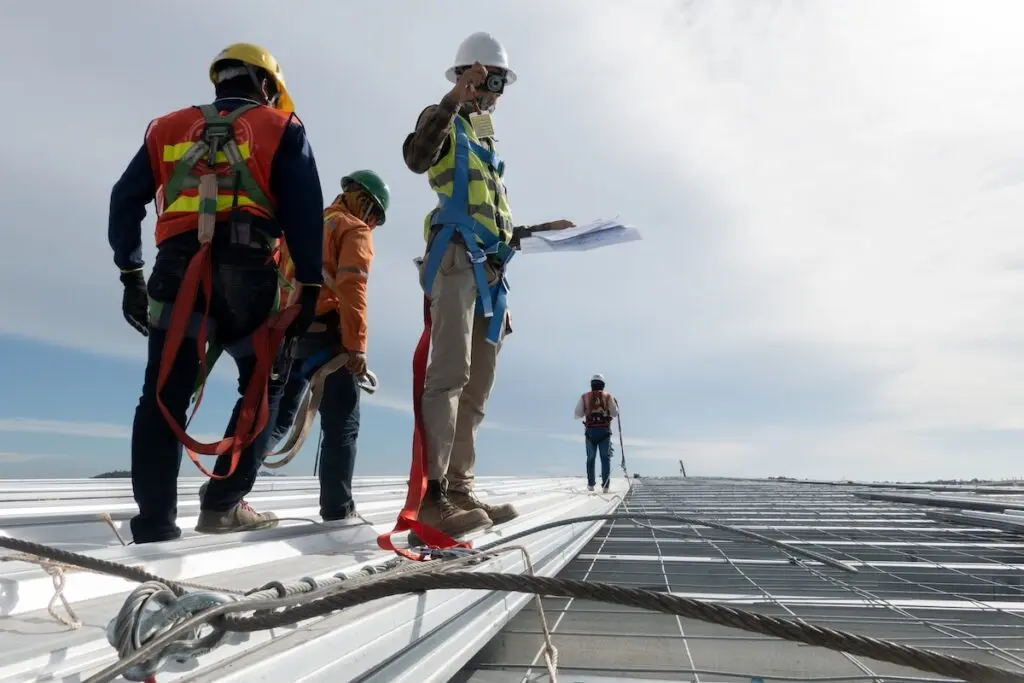
Unlike residential roofs, commercial roofing systems cover larger surface areas and often support HVAC units, solar panels, or drainage systems. A proactive maintenance plan is essential for minimizing costly surprises.
Key Reasons to Prioritize Maintenance
- Protect valuable assets: From inventory and machinery to technology and staff.
- Avoid unexpected downtime: Leaks or structural failures can shut down operations.
- Extend roof lifespan: Proper care adds years to your investment.
- Stay compliant: Well-maintained roofs meet insurance and safety inspection standards.
- Reduce liability: Prevents water damage, slip hazards, and emergency repairs.
7 Expert Commercial Roof Maintenance Tips
These professional strategies can help you stay ahead of damage, leaks, and costly repair bills.
- Schedule Biannual Inspections: Schedule inspections in April and October if you live in Northeast Ohio. April catches freeze-thaw damage from winter while repairs are still small, and October gets the roof sealed and drains cleared before the first snow.
- Clean Debris From the Surface: Remove leaves, trash, or branches that can clog drainage systems or trap moisture on flat roofing systems.
- Inspect and Clear Drains & Gutters: Standing water is one of the leading causes of roof membrane damage and leaks. Ensure scuppers, gutters, and internal drains are flowing properly.
- Check Flashing and Seals Around Penetrations: HVAC units, vents, skylights, and satellite equipment are common leak points. Reseal cracked flashing as needed.
- Monitor for Ponding Water: Flat or low-slope roofs often hold water after rain. Any puddles that remain 48+ hours should be addressed with improved drainage or added slope. In our climate, ponding water is a double threat. Whatever ponds in November freezes in December, and that ice works its way into every seam and crack it touches.
- Repair Minor Damage Promptly: Addressing small punctures, seam separations, or membrane blisters early prevents them from spreading into costly problems.
- Keep a Maintenance Log: Record inspections, photos, and repair dates. Documentation helps with insurance claims, warranty validations, and budgeting.
What Happens If You Skip Maintenance?
While delaying inspections might save time in the short term, it often leads to expensive and preventable issues later.
Common Consequences
- Water intrusion: Small tears or open seams can lead to roof leaks and mold inside your building.
- Membrane failure: UV exposure and pooled water degrade flat roof membranes like TPO or EPDM.
- Increased repair costs: What starts as a $500 patch job can quickly become a $10,000 replacement.
- Warranty voids: Most manufacturer warranties require documented maintenance to remain valid.
- Business disruptions: Emergency repairs may require temporary closures or limit access to parts of the building.
Different Roof Types = Different Needs
Not all commercial roofs are built the same. Maintenance approaches should be tailored to your roofing system.
Flat Roofing (TPO, EPDM, Modified Bitumen)
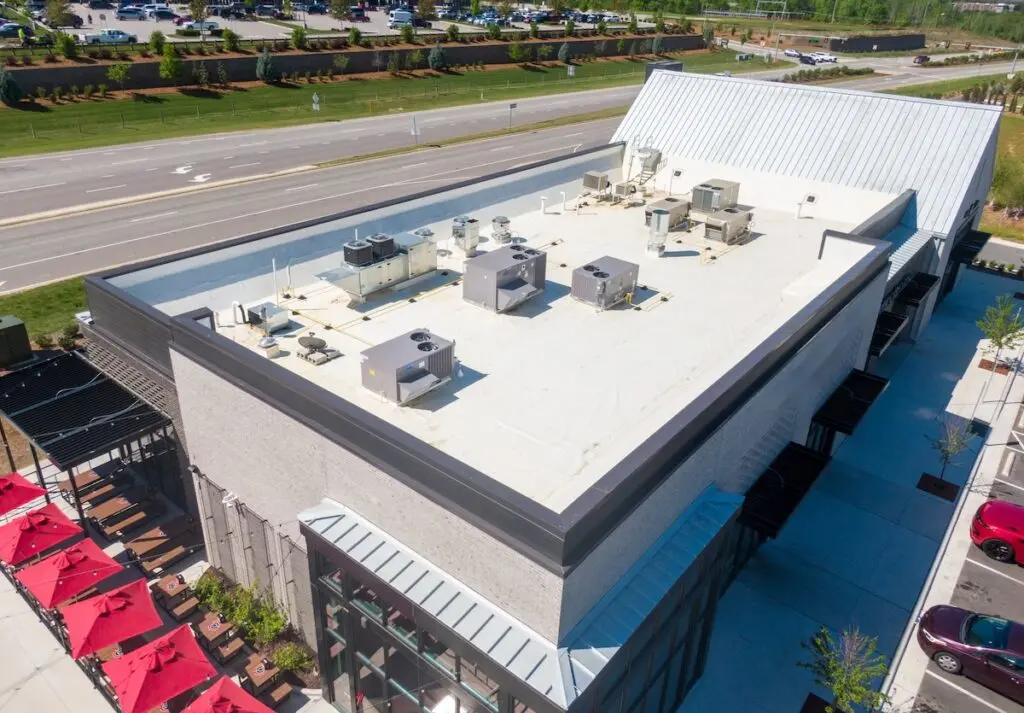
Common on low-slope facilities, these roofs require maintenance heavily focused on water resistance. Inspections of EPDM, Modified Bitumen, and TPO roofs must be critical of heat-welded seams and surrounding rooftop equipment to prevent water from pooling around HVAC units.
- Focus areas: Seams, flashing, ponding areas, membrane punctures
- Common issues: UV degradation, foot traffic damage, HVAC condensation runoff
Membrane seams take the brunt of Ohio’s freeze-thaw cycling, so seam inspection matters more here than it does in stable climates. A seam that would hold for years in the South can open up in a winter here.
Metal Roofing
Since metal panels expand and contract significantly with temperature swings, maintenance checks must prioritize the critical mechanical connection points. Metal roof maintenance should be focused on the fasteners and sealants, as these are the most vulnerable spots for water intrusion and wind damage on a commercial building.
- Focus areas: Panel seams, fasteners, rust spots, and sealants
- Common issues: Loose screws, expanding/contracting panels, and wind-driven rain leaks
Built-Up Roofing (BUR)
As an older, traditional commercial system, BUR requires maintenance that concentrates on the surface layer. Inspections are essential to check for material integrity, proper drainage, and ensuring the protective gravel or coating remains intact to prevent membrane exposure and leaks.
- Focus areas: Blisters, gravel displacement, and membrane exposure
- Common issues: Water absorption and weakening due to pooled debris or age
How Northeast Ohio Weather Affects Commercial Roof Maintenance
Commercial roofs in Northeast Ohio work harder than roofs in most of the country. Between lake-effect snow, dozens of freeze-thaw cycles every winter, and spring storm season, the maintenance schedule that works in Texas or Florida simply doesn’t cut it here in Medina, Brunswick, Strongsville, or Parma.
Freeze-Thaw Cycles Are Your Membrane’s Worst Enemy
Northeast Ohio winters rarely stay frozen. Temperatures swing above and below freezing dozens of times between November and April. Every cycle forces water that has seeped into small membrane cracks or open seams to expand as it freezes, prying the gap wider. A pinhole in October can become an active leak by March. This is why we recommend a fall inspection specifically to seal small defects before the first hard freeze, not after.
Snow Load and Ice at Drains
A foot of wet snow can add roughly 20 pounds per square foot to a flat commercial roof. Most buildings are engineered for it, but drifting against parapet walls and rooftop units concentrates that weight in ways design loads don’t anticipate. The bigger risk is ice. When drains and scuppers freeze over, meltwater has nowhere to go, ponds on the membrane, and refreezes overnight. If your building is in the snowbelt or has a history of ice damming, add drain checks to your winter routine, not just spring and fall.
Spring Storm Season
Late spring through summer brings the wind and hail events that generate most of the emergency calls we take across Medina and Cuyahoga counties. Hail bruises single-ply membranes and cracks aged BUR surfaces in ways that aren’t visible from the ground. After any storm with hail or gusts over 50 mph, schedule a walkthrough within a few days, and photograph everything. Insurance claims move faster when you can show documented before-and-after conditions.
What This Means for Your Schedule
For Northeast Ohio commercial buildings, we recommend timing the industry-standard twice-yearly inspections to our climate:
- April, after the last freeze-thaw cycles, to catch winter damage while repairs are small
- October, before the first snow, to seal seams, clear drains, and confirm the roof is watertight going into winter
- Within 72 hours of any hail or high-wind event, year-round
Northeast Ohio Commercial Roof Maintenance Checklist
You can either print this page or download our printable commercial roof maintenance PDF! Walk the roof with it twice a year, and keep the completed copies in your roof file. If any item fails, photograph it and call a commercial roofer before it grows.
Spring Checklist (April)
- ☐ Walk the full perimeter and field of the roof, looking for winter damage
- ☐ Inspect all membrane seams for splits, fishmouths, or lifting caused by freeze-thaw cycles
- ☐ Check flashings at walls, curbs, and penetrations for cracks or pulling
- ☐ Clear all drains, scuppers, and gutters of winter debris
- ☐ Look for ponding water 48 hours after a rain
- ☐ Inspect around HVAC units and other rooftop equipment for punctured or worn membrane
- ☐ Check interior ceilings and walls for new stains, especially under drains and penetrations
- ☐ Photograph and date everything you find
Fall Checklist (October)
- ☐ Remove all leaves and debris, especially from drains and scuppers
- ☐ Trim back any tree limbs overhanging the roof
- ☐ Have small cracks, open seams, and sealant gaps repaired before the first freeze
- ☐ Confirm drains flow freely, since a clogged drain in January becomes an ice dam
- ☐ Inspect and reseal pitch pans and penetrations
- ☐ Verify rooftop equipment panels and covers are secured against winter wind
- ☐ Review your snow removal plan and know your roof’s load limits
- ☐ Update your roof file with photos and this completed checklist
After Every Storm (Year-Round)
- ☐ Inspect within 72 hours of hail or winds over 50 mph
- ☐ Look for hail bruising on membranes, dents on metal, and displaced ballast
- ☐ Check that no debris is blocking drains
- ☐ Photograph all damage immediately for insurance documentation
Your Roof File Should Contain
- ☐ Warranty documents and the installation date
- ☐ Every inspection report and completed checklist
- ☐ Dated photos from each walkthrough
- ☐ Invoices for all repairs, with locations noted
Should You DIY or Call the Pros?
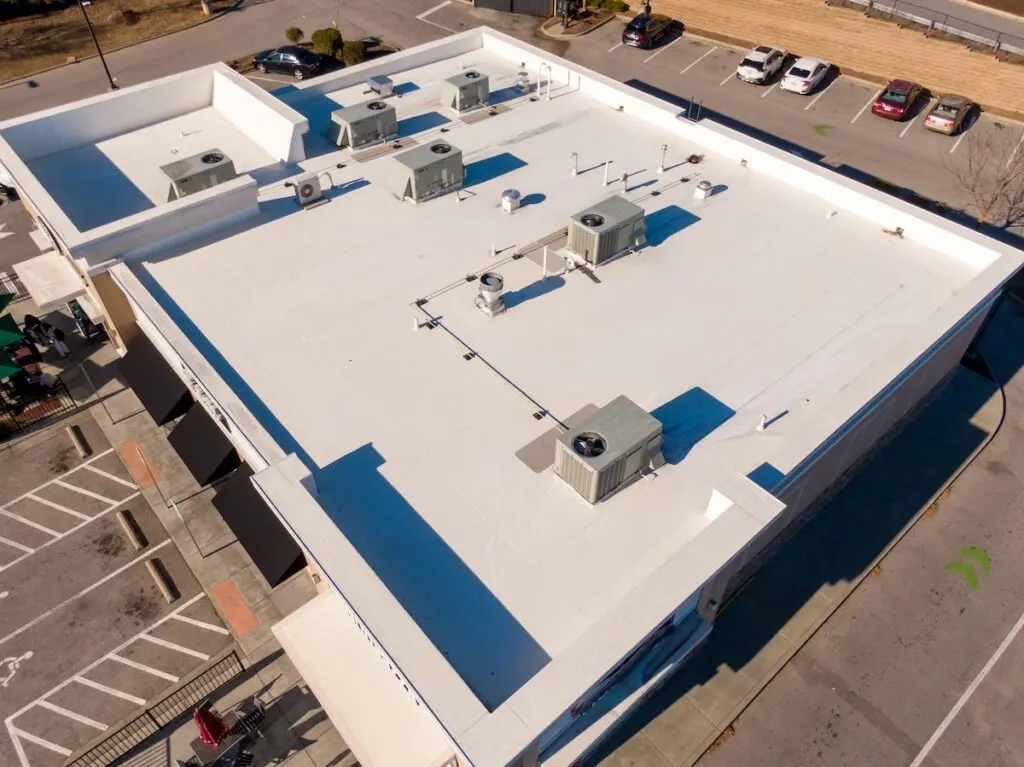
While your internal maintenance team may be able to spot obvious issues, commercial roofing requires professional roofing experience for accurate diagnostics and long-lasting repairs.
DIY Is Fine For:
- Debris removal from flat roof surfaces
- Visual checks around drains or equipment
- Reporting potential issues to your roofing contractor
Call the Pros For:
- Annual inspections with detailed reports
- Flashing, seam, or membrane repairs
- Leak detection testing using infrared or water tracing
- Warranty work to avoid voiding manufacturer coverage
A professional roofing partner will also help you anticipate when your roof may need restoration or replacement—before emergencies hit.
Budgeting for Commercial Roof Maintenance
Smart property managers plan for maintenance costs as part of their annual operational budgets.
What to Include
- Inspection fees: Typically charged semi-annually or annually
- Preventive repairs: Sealing, patching, and clearing drainage
- Emergency fund: Budget for unexpected leaks or damage after storms
- Roof asset management: Some contractors offer long-term planning tools to forecast costs over 10–20 years
Property managers should also budget for winter drain checks and post-storm inspections, which buildings in milder climates can often skip. Partnering with a commercial roofing contractor who provides detailed reporting can help you justify and plan for capital expenditures long before roof failure occurs.
Protect Your Investment With Buckeye State Roofing
Commercial roof maintenance is not a luxury—it’s a necessity for protecting your property, tenants, and business operations. Whether you oversee a single facility or multiple commercial locations, staying ahead of small issues prevents budget blowouts and structural damage in the long run.
At Buckeye State Roofing, we help business owners and property managers across Ohio stay proactive with customized maintenance programs, thorough inspections, and honest repair recommendations.
Contact us today for a free commercial roof inspection and start protecting your investment the smart way.