
Flat Roof Repair: 8 Common Problems And Reliable Solutions
5/26/26
7 Min Read
Proper flat roof repair is essential for preventing leaks, protecting commercial buildings, and extending the lifespan of a roofing system. While flat roofs are durable and cost-effective, they are also vulnerable to ponding water, membrane damage, and moisture intrusion if maintenance is neglected.
- Prevents water damage: Stops leaks from spreading
- Protects roofing materials: Reduces premature deterioration
- Extends roof lifespan: Helps avoid early replacement
- Improves energy efficiency: Supports insulation performance
- Protects structural components: Reduces moisture-related issues
Understanding common flat roof problems and the best repair solutions helps property owners maintain a reliable and long-lasting roofing system.
What Is Flat Roof Repair?
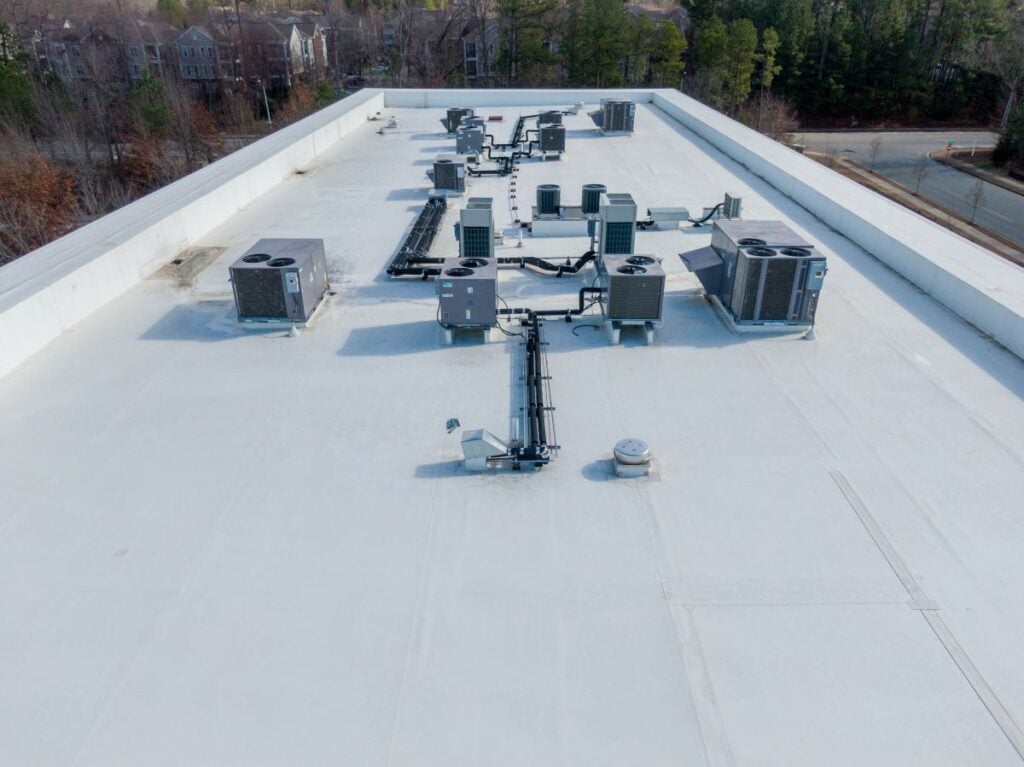
Flat roof repair involves identifying and correcting issues that compromise the performance of low-slope roofing systems. Repairs may include patching membrane damage, fixing flashing, sealing leaks, or replacing sections affected by moisture intrusion.
Flat roofs are commonly installed on commercial buildings because they provide usable space and simplified maintenance access. However, because water drains more slowly on low-slope roofs, regular inspections and repairs are important for preventing long-term damage. According to the Insurance Institute for Business & Home Safety, interior water damage remains one of the most consistent and ever-present sources of insurance claims and losses in residential and commercial construction — making timely flat roof repairs one of the most important steps a property owner can take to protect their investment.
8 Common Flat Roof Problems
Several issues commonly affect flat roofing systems over time, especially when exposed to severe weather, standing water, and aging materials.
1. Ponding Water
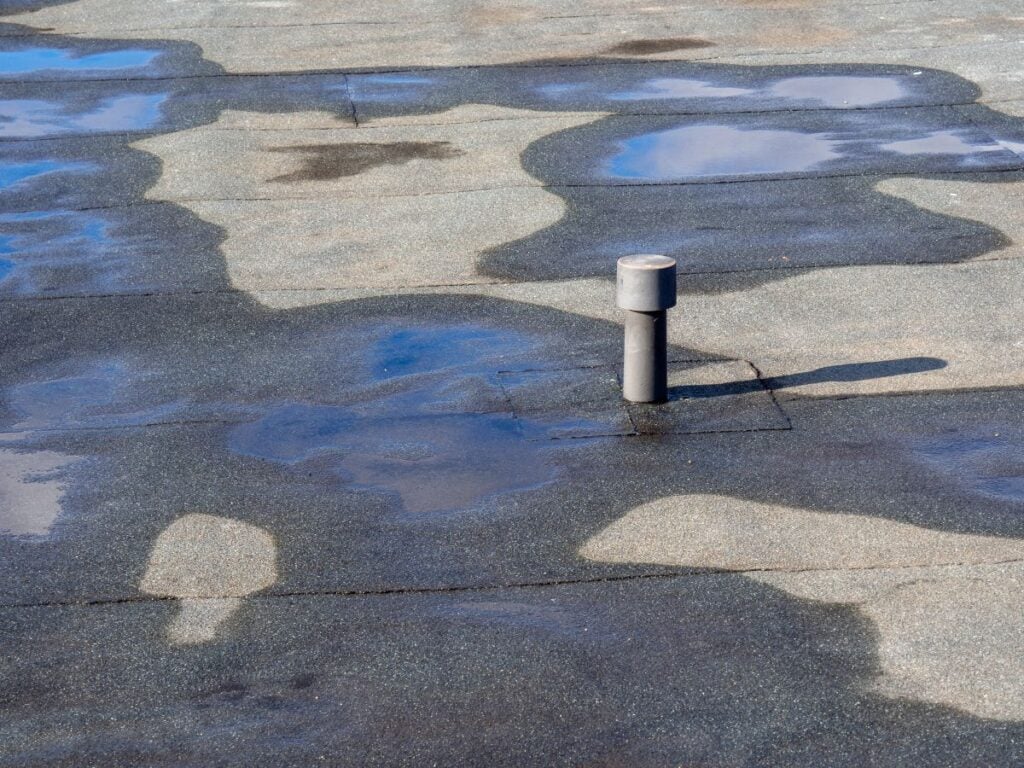
Ponding water occurs when rainwater remains on the roof surface for extended periods instead of draining properly.
Over time, standing water increases stress on roofing materials and raises the risk of future leaks.
- Drainage problems: Prevent proper water runoff
- Added roof weight: Places stress on the structure
- Moisture exposure: Increases deterioration risk
2. Roof Leaks
Leaks are one of the most common flat roof problems and can quickly lead to water damage inside the building.
Leaks often develop around seams, flashing, roof penetrations, or damaged membrane sections that create an entry point for moisture.
- Interior water stains: Indicates moisture intrusion
- Damaged insulation: Reduces energy efficiency
- Structural concerns: Long-term leaks weaken materials
3. Membrane Cracks Or Blisters
Flat roof membranes can crack, blister, or separate due to heat exposure, aging, or trapped moisture beneath the surface.
These issues weaken waterproof protection and increase leak potential.
- Surface deterioration: Weakens roofing performance
- Moisture intrusion: Allows water beneath the membrane
- UV exposure: Accelerates aging
4. Flashing Damage
Flashing protects vulnerable roof transitions around vents, drains, skylights, and walls.
Damaged flashing often creates openings where water can enter the roofing system.
- Separated flashing: Increases leak risk
- Corrosion or wear: Weakens waterproof protection
- Roof penetration issues: Common leak source
5. Drainage Problems
Clogged drains and poor roof slope can prevent water from leaving the roof efficiently.
Drainage issues contribute heavily to ponding water and moisture buildup.
- Blocked drains: Restrict water flow
- Standing water: Accelerates roof deterioration
- Overflow risk: Increases leak potential
6. Shrinking Roofing Membrane
Some flat roofing membranes, including epdm rubber systems, may shrink as they age, causing tension around seams and flashing.
This movement can create gaps that allow water intrusion.
- Membrane pulling: Stresses roofing materials
- Open seams: Increases moisture exposure
- Aging materials: Reduce flexibility over time
7. Storm Damage
Severe weather can puncture roofing membranes, loosen flashing, or damage drainage systems.
Flat roofs are especially vulnerable to debris accumulation after storms.
- Wind damage: Lifts membrane sections
- Debris impact: Causes punctures or tears
- Heavy rain exposure: Increases leak risk
8. Poor Installation
Improper installation can lead to premature roof failure and repeated repair needs.
Low-quality workmanship often affects seams, drainage design, and flashing performance.
- Improper sealing: Creates leak-prone areas
- Poor drainage setup: Increases standing water risk
- Reduced roof lifespan: Accelerates deterioration
Reliable Flat Roof Repair Solutions
The right repair method depends on the type and severity of roof damage.
Membrane Patching
Small punctures or cracks can often be repaired using compatible roofing membrane patches and roofing cement.
These repairs are commonly used to stop a small leak before it becomes a larger roofing issue.
- Restores waterproofing: Seals damaged sections
- Cost-effective repair: Helps avoid larger repairs
- Quick installation: Reduces downtime
Flashing Repairs
Repairing or replacing flashing helps eliminate common leak points around roof penetrations.
- Improves waterproofing: Protects vulnerable transitions
- Prevents leaks: Seals roof openings
- Supports drainage: Helps direct water flow
Roof Coatings
A roof coating can help improve waterproof protection and extend the lifespan of an old roof that is still structurally sound.
Many coating systems also provide a reflective surface that improves energy efficiency by reducing heat absorption.
- UV protection: Reduces sun-related wear
- Moisture resistance: Helps prevent leaks
- Reflective surface: Supports improved energy efficiency
Drainage Improvements
Improving roof drainage helps reduce ponding water and long-term moisture exposure.
- Improves water flow: Prevents standing water
- Protects roofing materials: Reduces deterioration risk
- Supports long-term performance: Improves roof lifespan
Flat Roof Repair Comparison Table
Different repair methods are used depending on the condition of the roofing system.
| Repair Method | Primary Purpose | Best For | Cost Level |
| Membrane Patching | Seal damaged areas | Small punctures or cracks | Low |
| Flashing Repair | Prevent leaks | Roof penetrations and seams | Medium |
| Roof Coating | Extend roof lifespan | Aging roofing systems | Medium |
| Drainage Repair | Improve water runoff | Ponding water issues | Medium |
| Partial Roof Replacement | Restore damaged sections | Severe membrane deterioration | High |
Choosing the correct repair approach helps reduce long-term maintenance expenses and improve roof performance.
7 Important Flat Roof Materials
Different roofing materials require different repair approaches and maintenance strategies. The most critical factor in flat roof repairs is material compatibility; using an asphalt-based product on an EPDM or TPO roof can lead to significant damage.
- EPDM Rubber: Flexible membrane commonly used on commercial flat roofs
- Modified Bitumen: Durable asphalt-based roofing material for low-slope roofs
- TPO Roofing: Reflective membrane known for energy efficiency
- PVC Roofing: Strong chemical-resistant roofing system
- Roof Coatings: Protective systems that extend roof lifespan
- Roofing Cement: Common sealant used for temporary or targeted repairs
- Metal Flashing: Protects vulnerable roof transitions and seams
Understanding roofing materials helps property owners choose more effective repair and maintenance solutions.
Benefits Of Professional Flat Roof Repair
While some diy repairs may temporarily stop a leak, professional roofing services help ensure permanent solutions that address the root cause of the problem.
- Improves long-term performance: Reduces repeat repairs
- Prevents future leaks: Identifies hidden roofing issues
- Protects the entire roof: Helps maintain system durability
- Supports energy efficiency: Preserves insulation and roof coating performance
- Reduces replacement risk: Helps avoid premature new roof installation
Professional repairs are especially important when dealing with extensive damage, recurring leaks, or aging roofing systems.
Flat Roof Repair vs Pitched Roof Repair
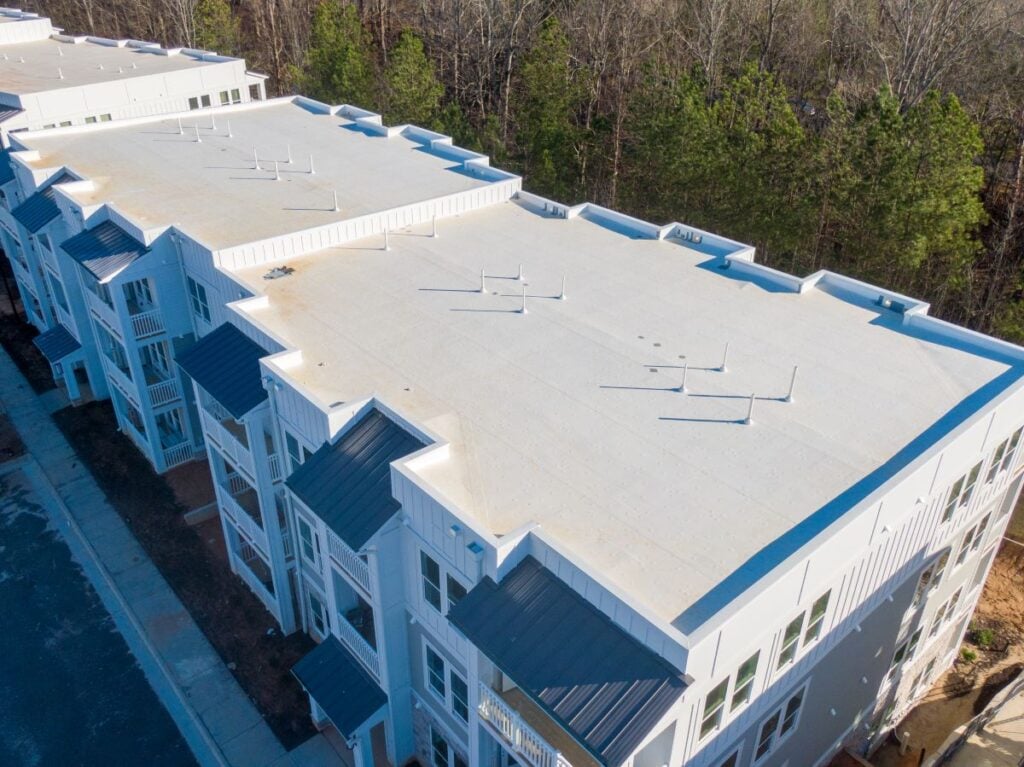
Repair methods for flat roofs differ significantly from those used on a pitched roof due to drainage and material differences.
Flat roofs rely heavily on waterproof membranes and proper drainage systems, while pitched roof systems are designed to shed water more quickly through slope and overlapping materials.
Because water remains on flat roofs longer, maintenance and repairs often focus more heavily on moisture control and seam protection.
Frequently Asked Questions About Flat Roof Repair
Flat roofing systems require specialized maintenance and repair methods. Understanding common concerns helps property owners make informed decisions.
How long does flat roof repair usually last?
The lifespan of repairs depends on the roofing material, repair quality, and overall roof condition. Proper maintenance helps extend repair performance significantly.
Can ponding water damage a flat roof?
Yes, standing water increases stress on roofing materials and can accelerate leaks and membrane deterioration over time.
Are diy repairs effective for flat roofs?
Some diy repairs may temporarily stop a small leak, but professional repairs are usually needed for permanent solutions and long-term protection.
When should a flat roof be replaced instead of repaired?
Replacement may be necessary when severe membrane deterioration, widespread leaks, or structural issues affect large portions of the entire roof.
Are flat roofing membranes easy to damage?
Yes, thin single-ply membranes can be punctured by sharp debris, severe weather, and routine foot traffic from HVAC maintenance. Regular inspections help identify damage early and reduce the risk of leaks developing over time.
Protect Your Building With Buckeye State Roofing
Flat roof repair plays an important role in protecting commercial buildings from leaks, moisture damage, and premature roof failure. Addressing roofing issues early helps improve long-term performance and reduce costly repairs.
Buckeye State Roofing provides expert flat roof inspections, repair services, roof coating applications, and replacement solutions throughout Northeast Ohio. Contact our team today to schedule a professional roofing evaluation for your property.
